Trending

Wetland fieldwork goes wrong in small, ordinary ways far more often than dramatic ones. A foot goes through a mat of vegetation that looked solid. A tide comes in faster than the creek suggested. A phone loses signal two fields before the access gate. None of these are catastrophes on their own — but stacked together, on a cold afternoon, with a team strung out across a bog, they become one.
A pre-fieldwork routine is not bureaucracy. It is what lets you spend your day thinking about the data rather than about whether you can get out of the site before dark. What follows is the version worth running through the day before you go.
A risk assessment copied from another project is worse than no assessment at all, because it gives false comfort. Write it for this site, this season and this team. Think through the whole day in order: travel, access, the work itself, egress, and the return journey. Note the things that change — a footpath closed by flooding, a gate that is padlocked in winter, a river crossing that is only safe after a dry spell.
That last question matters most. Deciding your abandonment triggers in advance means you do not have to negotiate them in bad weather with wet hands.
Wetland sites are awkward because the ground is often the hazard and the work site is often the escape route. Kit should reflect that.
Chest waders are a tool for shallow, known-depth water. They are not a licence to go deeper, and if you fall in they can fill and drag. Wear a belt, keep the straps done up and stay within wading depth you have already probed. Above that, switch to a dry suit or a boat.
Cold water is the part people underestimate. A slip into a peat pool in November is not just uncomfortable; it drains heat fast and reduces your ability to help yourself. Get the person out, get wet layers off, get them into dry clothing, shelter and warmth, and watch them. If someone has been immersed and is shivering uncontrollably, confused, drowsy or slurring, treat it as a medical emergency and call for help. If you are unsure about any health concern after fieldwork, speak to a GP, NHS 111 or your occupational health service rather than working it out on the drive home.
Check signal at the site before you rely on it, not on the day you need it. In many lowland marshes the signal vanishes in the middle of the field even when it is strong at the car park. Take a phone in a waterproof pouch, a power bank, and a personal locator beacon or satellite messenger if you are working well beyond coverage.
Set a check-in schedule — a message at the start of work, at a mid-point and on leaving — and give it to two people who will actually act if you miss one. On tidal marshes, add the tide window to that message. For coastal sites, a handheld VHF radio is worth more than a mobile phone, and it reaches the coastguard directly.
Seconds matter, and nobody performs well under pressure without having thought it through first. Talk this through as a team, out loud, before you leave the vehicles.
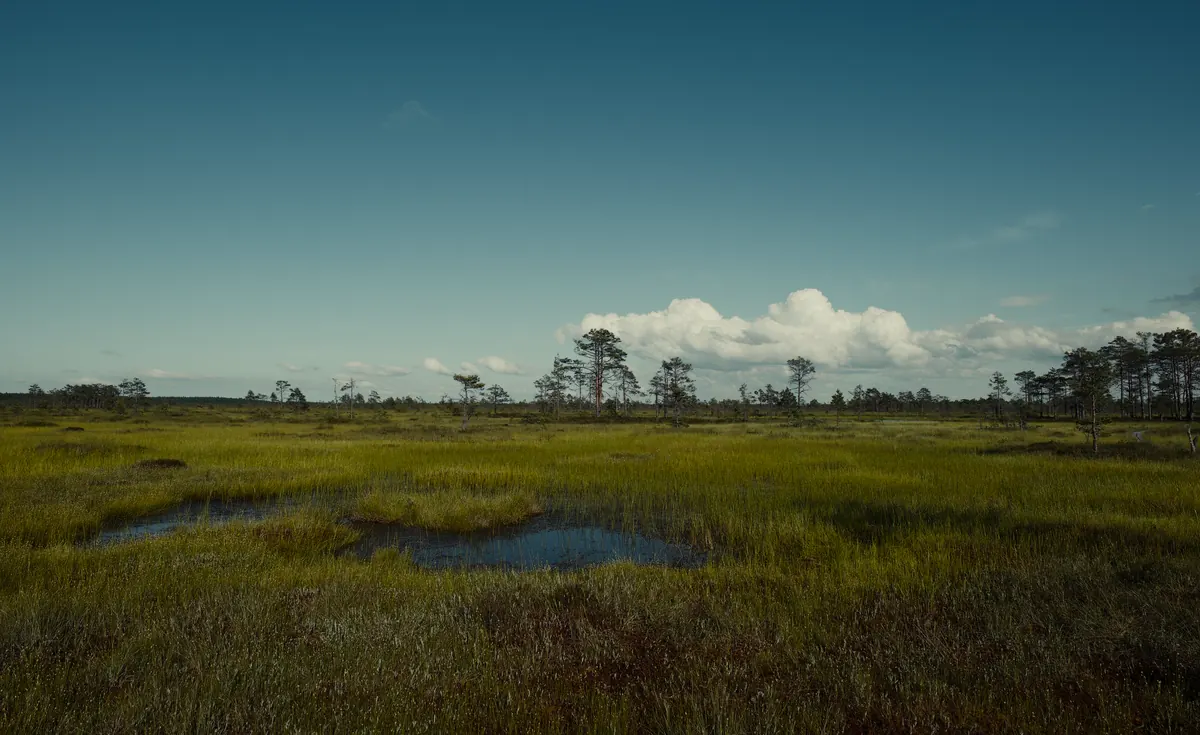
Peat is the trickiest surface in British wetland science. Sphagnum lawns can hide pools. Hags and gullies hide behind heather and cottongrass. Floating mats of vegetation can carry a person one day and not the next. Saltmarsh has its own version: creeks that cut deep under grass, and soft mud that is firm at the edge and bottomless ten metres out.
Two habits cover most of it. Probe before every step in ground you have not already walked, and move as a group rather than a scatter — close enough to see each other, far enough apart that one person's mistake does not take two people down.
If you would not put your weight on it with a pole testing it first, do not put your weight on it at all.
Pack in the evening, not the morning. Charge everything. Check the forecast and the tide table together and decide whether the plan still holds. Brief the team on the route, the turnaround time and the abandonment triggers. Send the plan to your two contacts. Then put the bag by the door and stop thinking about it.
On the day, treat the plan as something you keep testing rather than something you follow. If the ground is wetter than expected, if the wind rises, if someone is tired or quiet, change the plan. No dataset is worth a rescue call, and the best wetland fieldwork has a quiet, unremarkable safety record behind it.
Photo: UserBot / Pixabay